Brand: Nav
Dasa
Uncovering the "Why" Behind Low CSAT Scores
From Qualitative Insight to Design Strategy: Redefining the User Feedback Loop.
Project InformationTIMELINE
March, 2023
CLIENT
Dasa
BRANDS
Nav
ROLE
UX Researcher Senior
Project Resume
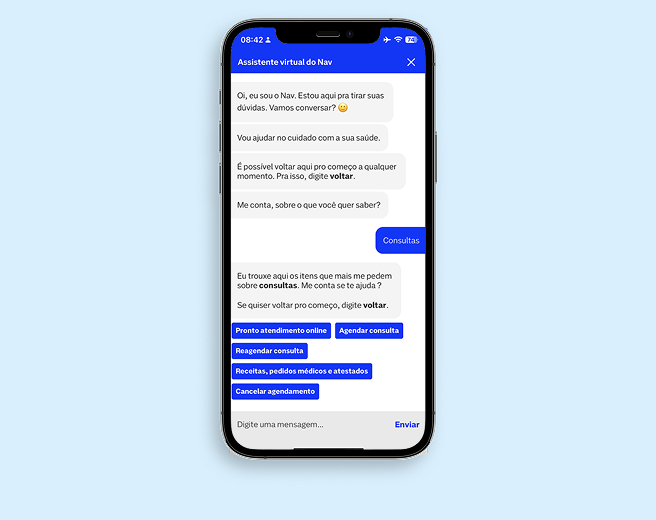
As a Senior UX Researcher, I led a qualitative research initiative to understand why the Customer Satisfaction Score (CSAT) was consistently underperforming against the established benchmark for the service platform. I structured the study around in-depth interviews and contextual inquiries with real users, focusing on how they navigated the platform and where friction points appeared in their journeys.
The research uncovered critical insights: users were frustrated not by the core service but by hidden usability barriers, unclear guidance, and inconsistent communication across touchpoints. These findings reframed the challenge from being purely operational to one rooted in experience design.
By synthesizing qualitative data into actionable themes, I was able to align stakeholders on the real drivers behind the low CSAT. This work directly informed the design roadmap, ensuring that improvements prioritized clarity, usability, and consistency, ultimately bridging the gap between user expectations and service delivery.
CONTEXTThe CSAT KPI for the Nav Chatbot service had been consistently below expectations.
On paper, it looked like an isolated number, but in reality, it pointed to a deeper issue: we weren’t capturing the true voice of our users.
Core Problem
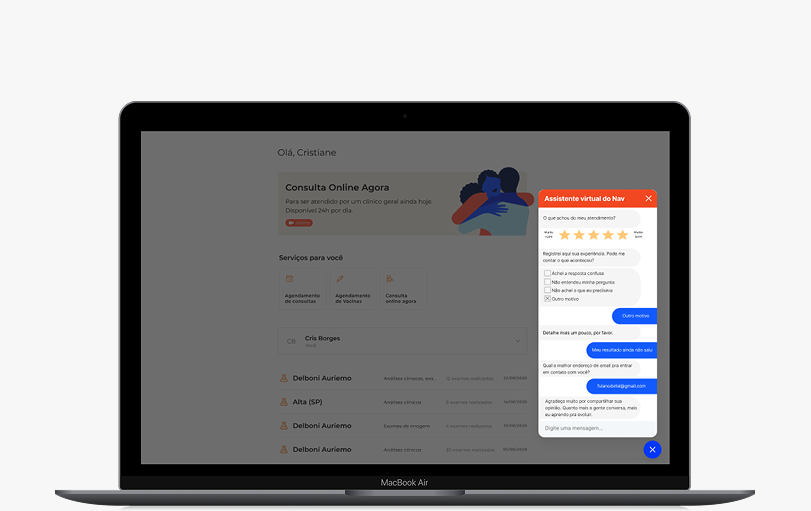
When the chatbot resolved issues efficiently, most users exited without submitting the CSAT survey. On the other hand, users who had a frustrating experience were more likely to respond.
This imbalance distorted the metric, making it unreliable as an indicator of service quality.
Phases of User ResearchMy role was to lead a deep-dive UX research to understand why the protocol was so ingrained in the operation user journey. I designed and executed a three-phased research plan:
Phase 1: Discovery
This phase began with stakeholder interviews and journey mapping to frame the high-level process. The team then went on-site to various units, using shadowing and a "mystery shopper" approach to observe and document the real, unwritten workflows of patients and the operations team. The research focused specifically on how the protocol was used at key touchpoints, from patient check-in to the exam room.
Phase 2: In-depth Analysis
This phase involved a rigorous qualitative analysis across different Brazilian states and brands within the Dasa portfolio. We focused on the protocol's functionality, data points, and context, examining for whom each element was important and validating findings from the discovery phase. This process helped uncover systemic challenges that impacted consistency and efficiency.
Phase 3: Synthesis & Strategy
A service blueprint was designed to synthesize findings and frame the problem for the CX/Design Team and Business stakeholders. This step translated research insights into a clear, evidence-based foundation for solutions. By connecting operational pain points with strategic opportunities, the team created a pathway for digitalization and long-term process improvement.
KEY FINDINGSInsights
Operational Contingency
In the event of system outages, the physical document was the only reliable source of key information. This provided a crucial layer of business continuity, ensuring the laboratory could continue operations without disruption, even in offline scenarios.
Patient and Data Verification
The protocol served as a critical double-check for staff, allowing them to cross-reference patient data against a physical document to prevent critical errors before exams. The research identified a key dependency: a unique identifier for the exam was not visible on the front-end system, making the physical document essential for this verification process.
Support for Future Initiatives
The insights gathered about the protocol's use and its critical functions provided a clear roadmap for future digital solutions. By understanding the why, who, what and how behind the paper document, the team was able to define key requirements for a more resilient and efficient digital-first workflow.